Hải Phòng: hương vị thành phố cảng
Opera House · Tam Bac · Du Hang Pagoda · city food streets
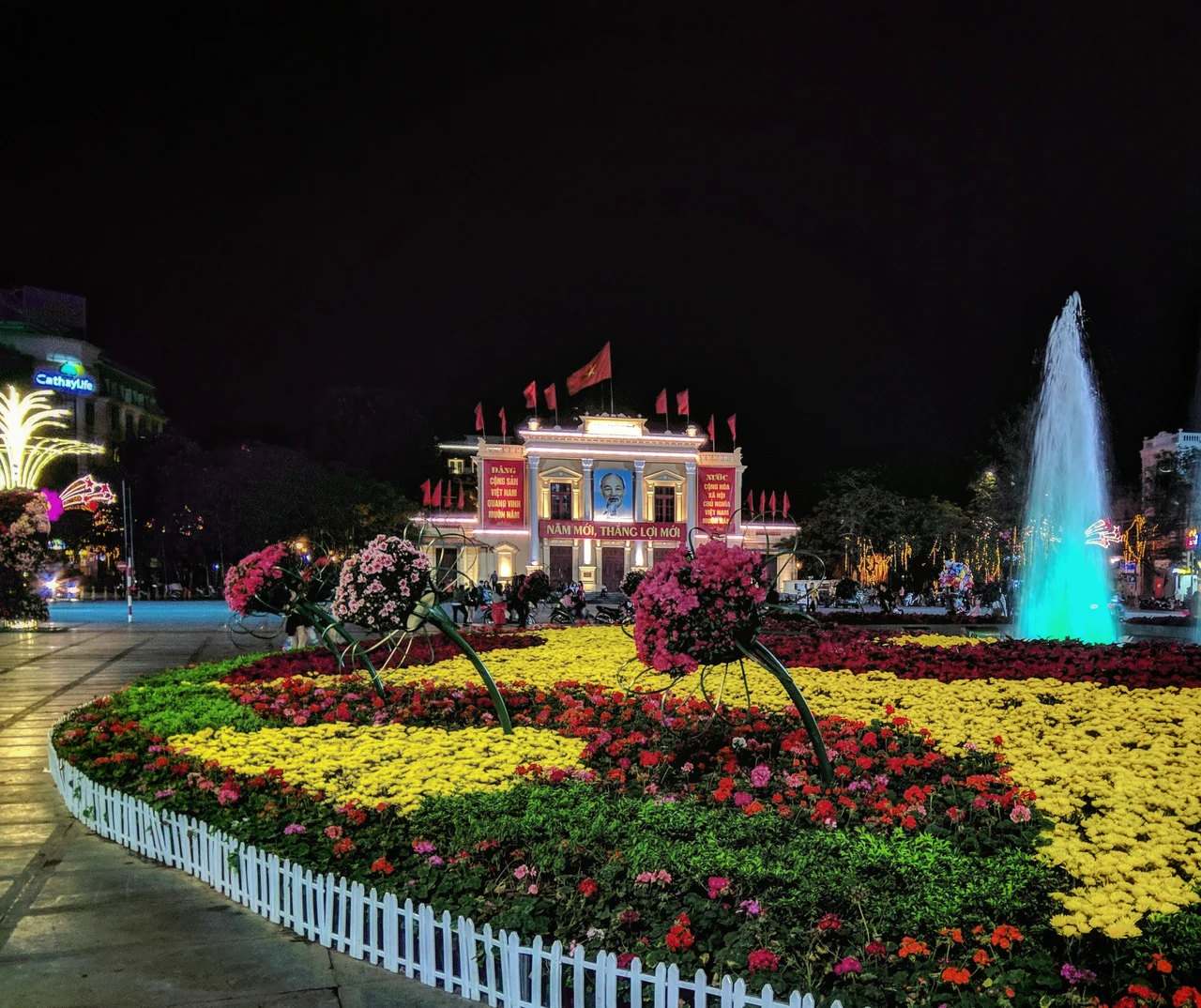
Ảnh minh họa vùng hoặc phương tiện, không phải điểm dừng cam kết. ©
Keep the day inside the port city rather than rushing straight to the islands. The riverfront, old streets and a quiet pagoda make room for the city's distinctive noodle lunch.
A city that began with a treaty
Hải Phòng is a port first and a city second, and it can name the paperwork that made it. After the French took the north the first time, the Nguyễn court signed the Treaty of Giáp Tuất in 1874, and under it the sea gate of Ninh Hải in Hải Dương province was opened to trade. Customs and wharves grew there; in 1887 the French administration carved a province of Hải Phòng out of Hải Dương, and on 19 July 1888 a decree of the President of France made the city itself. By 1889 the city had been separated from the province around it. What the colonial plan built is still the shape of the centre: a grid of administrative buildings, banks, schools and villas between the Cấm river and the Tam Bạc, laid out around a green strip in the middle. The city was the first place in Indochina to have electric light, and it has been the country's northern port ever since. Since 1 July 2025 it is also much larger than it looks from the saddle: the province of Hải Dương was merged into it, giving 3,194.72 km², 4,664,124 people and 114 commune-level units.
The theatre on the old market ground
At the start of the twentieth century about sixteen thousand people lived here, several thousand of them French soldiers and settlers, and the administration wanted a theatre at the point where the European, Chinese and Vietnamese quarters met. The site chosen was the high, dry market ground of the old village of An Biên. Work began in 1898 and finished in November 1900. The first architect, Berruer, won the tender; after mistakes in the building the city handed the work to Bourdeaud from the middle of 1899. The materials came from France, the labour was Vietnamese, and the model was Paris: Baroque, with curved masses, Corinthian pilasters against the walls and a lyre carved on the door. Inside there are two tiers of seats, Gothic arched openings on the upper level, and a vaulted ceiling painted with flower baskets and the names of Mozart, Beethoven and Molière. Only three cities in French Indochina got a theatre of this kind — Hanoi, Hải Phòng and Saigon. On 20 November 1946 the building became a battlefield: thirteen fighters under Đặng Kim Nở held the square for a day and a night.
Lê Chân's ground
Long before the treaty there was An Biên, and local history gives it a founder: Lê Chân, one of the women commanders of the Trưng sisters' rising against Han rule in the first century. She is said to have cleared this ground, settled people on it and raised a force here, and the city has never let go of her. Her shrine, Đền Nghè, stands in the middle of the modern blocks, and her statue stands in the open a few streets away. The other name the city keeps is Ngô Quyền, who destroyed the southern Han fleet in the Bạch Đằng estuary in 938 — the same water saw the war against the Song in 981 and the Trần victory of 1288. The communal house at Hàng Kênh is dedicated to him, and by the end of Tự Đức's reign it had become the administrative seat of An Dương district. Go inside for the carpentry: the đình is known for its traditional wood carving, and the interior is the reason to stop rather than the gate.
The bank of the Tam Bạc
The Tam Bạc is the small river that runs through the middle of town to meet the Cấm, and the street along it is the oldest commercial front in Hải Phòng. Phố Tam Bạc and Lý Thường Kiệt still carry the shophouses of the late nineteenth and early twentieth centuries, with Vietnamese, Chinese and French details on the same façades — a port with three communities trading in one street. The iron market at the end of it, Chợ Sắt, was the market of the whole north-east for a century. Two kilometres north the Bính bridge crosses the Cấm to Thủy Nguyên, and from the bank you see what the city actually does: container berths, cranes, tugs and the river traffic that keeps them fed. Between the two, on the green strip by the theatre, stand the five little flower pavilions of the Quán Hoa, built in 1944 in a form that deliberately recalls a village communal house. The city's own name for itself is written in the street trees: red flamboyants, three thousand and sixty-eight of them along Phạm Văn Đồng alone.
Why you stay for lunch
Hải Phòng eats differently from Hanoi, and it knows it. The city's dish is bánh đa cua: red bánh đa noodles, which are made around Dư Hàng Kênh on the edge of the old centre, in a broth of field crab, sour and hot rather than sweet. Its partner is nem cua bể, the crab roll folded square like a Tết rice cake instead of rolled into a cylinder. The street food that everyone under thirty grew up on is bánh mì cay, a pâté baguette the length of a hand and the thickness of a finger, sold since the 1980s and eaten three or four at a time with chí chương, the fermented chilli sauce made to Chinese-Vietnamese family recipes in the city. Add the shellfish: giá bể, stir-fried in the shell, and the square banana-leaf bánh bèo of the late afternoon. The fish sauce on the table is likely to be from Cát Hải, the island works whose Vạn Vân brand was the largest in Indochina between the 1920s and the 1940s.
Chúng tôi tự dẫn chuyến đi này.
Hướng dẫn viên thuộc đội của chúng tôi, tuyến đường chúng tôi đã tự chạy, và bạn có một kênh trò chuyện với chúng tôi suốt chuyến đi.
- Hướng dẫn viên từ đội của chúng tôi
- Những tuyến đường chúng tôi đã tự chạy
- Xưởng của chúng tôi tại 5 thành phố và các xưởng đối tác
- Một kênh trò chuyện với chúng tôi suốt chuyến đi
- 16
- thành phố
- 24
- tour
- 71
- hành trình
- 6
- xưởng